



CENTER FOR NON-CLINICAL DEVELOPMENT
Welcome.
Despite the extraordinary progress in drug development, development failures remain common. It is especially unfortunate when a program fails because predictable and manageable issues were not addressed with sufficient experience or technical insight.
Drug development is often called a failure-prone industry, which makes effective attrition management essential. In toxicology, risk management is itself a core capability of drug development because toxicity must be anticipated and managed through multidisciplinary knowledge and experience.
CND (Center for Non-clinical Development) originated as the name used during a Ministry of Trade, Industry and Energy project to establish and provide a predictive assessment platform for reducing drug-development failure. Although the project has concluded, we continue its sustainable educational activities on a voluntary basis.
Our laboratory works with drug developers to resolve and manage diverse toxicity issues, improve the probability of success, and share the resulting knowledge and experience. We welcome your interest and participation as we work to advance nonclinical toxicology capabilities in Korea.
Thank you.
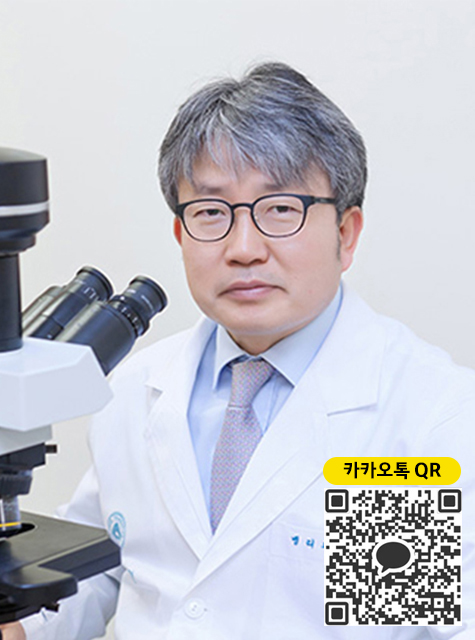
Asan Medical Center Woo-Chan Son
CURRICULUM VITAE
Curriculum Vitae & Research
Curriculum Vitae
- DVM and PhD, specializing in veterinary medicine and toxicologic pathology
- Professor of Pathology, Asan Medical Center / Experimental and Toxicologic Pathology
- Training in experimental pathology, Hannover Medical School, Germany
- Principal Research Scientist in toxicologic pathology, LG Life Sciences — 10 years
- Senior Pathologist, Huntingdon Life Sciences (now Labcorp), United Kingdom — 10 years
- Asan Medical Center and University of Ulsan College of Medicine — 16 years
Professional Qualifications & Activities
- Fellow of International Academy of Toxicologic Pathology (FIATP)
- Former Associate Editor, Toxicologic Pathology
- Member, Central Pharmaceutical Affairs Council, Ministry of Food and Drug Safety
Awards
- Ministerial Commendation, Ministry of Trade, Industry and Energy, and other honors
Consulting Experience
- Consulting for numerous organizations in Korea, the United States, Europe, Japan and China
- Extensive annual and cumulative consulting engagements and collaborations
Patents
- Recombinant vaccinia virus expressing IL-12 and an immune-checkpoint inhibitor, and uses thereof 2024.08.19
- Novel vaccinia virus variant with increased extracellular enveloped-virus production 2022.12.29
- Novel vaccinia virus variant with increased extracellular enveloped-virus production 2022.12.28
- Recombinant vaccinia virus expressing IL-12, and uses thereof 2022.12.07
- Recombinant vaccinia virus expressing IL-12, and uses thereof 2022.12.06
- Vaccinia virus variant with increased extracellular enveloped-virus production 2021.12.29
- Construction and characterization of an IHD-strain vaccinia viral vector replacing B8R with murine interleukin-12 (IL-12) 2021.12.07
- Training methods, programs and systems for an AI-based comet-assay analysis model, and analysis methods using the same 2020.03.18
Selected Publications
120+ publications in the past five years
Research in toxicologic pathology and nonclinical development
Select a title to open its DOI or official publication page.
Research in toxicologic pathology and nonclinical development
- Deep learning based method for grading histopathological liver fibrosis in rodent models of metabolic dysfunction associated steatohepatitis
- Tie2 activator 4E2 ameliorates diabetic nephropathy and synergizes with dapagliflozin in a mouse model
- Toxicity and efficacy study of a combination of two retinoic acids in an ApoE knockout mouse model of atherosclerosis
- Enhanced productivity and comet plaque formation in a newly isolated clone of the Vaccinia virus IHD strain
- Improved safety of chimeric antigen receptor T cells indirectly targeting antigens via switchable adapters
- Anti-4-1BB×PD-L1 Bispecific Antibody Reinvigorates Tumor-Specific Exhausted CD8+ T Cells and Enhances the Efficacy of Anti-PD-1 Blockade
- Fast formation and maturation enhancement of human liver organoids using a liver-organoid-on-a-chip
- Toxicology and safety study of L-tryptophan and its impurities for use in swine
- Two-year carcinogenicity study of a novel plasticizer, bis(2-ethylhexyl) cyclohexane-1,4-dicarboxylate (Eco-DEHCH), by oral diet in Han Wistar rats
- Toxicology and safety study of L-tryptophan and its impurities for use in broiler feed
- Combination of PD-1 Checkpoint Blockade and Botulinum Toxin Type A1 Improves Antitumor Responses in Mouse Tumor Models of Melanoma and Colon Carcinoma
- Safety concerns regarding impurities in L-Tryptophan associated with eosinophilia myalgia syndrome
- Carcinogenicity assessment of tegoprazan in Sprague-Dawley rats and ICR mice
- Evaluation of the 52-week chronic toxicity of a novel phthalate-free plasticizer, Eco-DEHCH, in Han Wistar rats
- Safety evaluation of dried L-tryptophan fermentation product in Sprague-Dawley rats
- A Selective Adenosine A3 Receptor Antagonist, HL3501, Has Therapeutic Potential in Preclinical Liver and Renal Fibrosis Models
- HL3501, a Novel Selective A3 Adenosine Receptor Antagonist, Lowers Intraocular Pressure in Animal Glaucoma Models
- CKD-506: A novel HDAC6-selective inhibitor that exerts therapeutic effects in a rodent model of multiple sclerosis
- Toxicological profile of bisphenol F via comprehensive and extensive toxicity evaluations following dermal exposure
- M-134, a novel HDAC6-selective inhibitor, markedly improved arthritic severity in a rodent model of rheumatoid arthritis when combined with tofacitinib
- Comparative Analyses of Inflammatory Response and Tissue Integration of 14 Hyaluronic Acid-Based Fillers in Mini Pigs
- Predicting Successes and Failures of Clinical Trials With Outer Product-Based Convolutional Neural Network
- Comparative Analysis of Hyaluronidase-Mediated Degradation Among Seven Hyaluronic Acid Fillers in Hairless Mice
- Predicting successes and failures of clinical trials with an ensemble LS-SVR
- PKM2 in Canine Mammary Tumors: Parallels to Human Breast Cancer
- Dataset and Deep Learning Baseline Method for Comet Segmentation for Comet Assay Image Analysis
- Association between ARID2 and RAS-MAPK pathway in intellectual disability and short stature
- Identifying Stabilin-1 and Stabilin-2 Double Knockouts in Reproduction and Placentation: A Descriptive Study
- Sappanone A Prevents Left Ventricular Dysfunction in a Rat Myocardial Ischemia Reperfusion Injury Model
- Use of 3D Human Liver Organoids to Predict Drug-Induced Phospholipidosis
- Metformin Alleviates Left Ventricular Diastolic Dysfunction in a Rat Myocardial Ischemia Reperfusion Injury Model
